
Commissions, Dinners & Workshops
For conferences, galas, donor evenings and annual meetings seeking to keep people coming back — not just to mission and programs, but to each other — Arts SoCo crafts experiences to move, connect and elevate.
We create poems made from participants’ words and reflections, set to original music, that show people they are heard and deepen understanding of what’s held in common.
We also facilitate Ten Toasts Dinners and experiential workshops that make it easy, fun and psychologically safe for people to be curious, listen generously, get real and connect emotionally in ways that feel alive.
Commissions
-

Crowdsourced Poems with Original Score: Mirroring What’s Shared, What’s Unseen
A crowdsourced poem is made from community members' reflections and words.
Community members write responses to prompts, tailored according to relationships developed over site visits.
Those responses shape a spoken word poem reflecting the community's feelings, beliefs, values, inspirations, trepidations and aspirations.
Anonymous participation encourages candor.
The poem is scored with original music and shared back live with the community.
The poem is like a survey, revealing both what’s in common as well as unspoken tensions and disagreements within the group.
_______
“Regie sings and chants for all of us. Nobody gets left out.”
— Kurt Vonnegut"...a vital and vibrant way to illustrate the possibilities of interfaith and intercultural cooperation"
— Greg Mcgonigle, Tufts University, Medford, MA
Experiential Dinners & Workshops
-
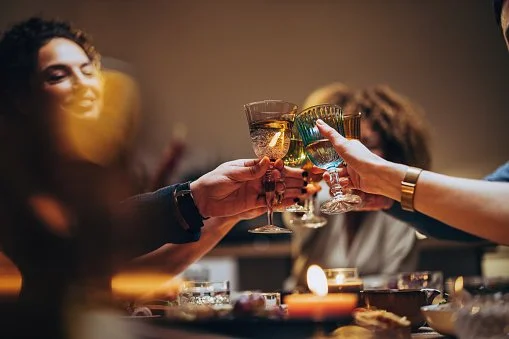
Ten Toasts Dinners: Laughter, Realness, Connection
Participants join each other for a dinner as we regale each other with meaningful conversation and stories in the form of toasts reflecting a theme tailored to the group, (e.g., “To Those Who Shape Us.*”)
It’s like a game: Participants dine in groups of 8-12 fellow travelers (hopefully whom they do not know or know well). At some point in the dinner, each participant is invited to ding their glass and share a brief story or experience that ideally no one at the table has heard before, relating to the theme: For example, a story about a person that shaped the teller, and about a way the teller was changed. At the end of their story, the teller raises their glass and toasts to an element or value their story highlights (e.g., to those who taught us resilience!) and invites all others in their group to raise their glasses as well.
What motivates people in a fun, safe way? The only other rule: The last person in each group has to sing their toast!
Ten Toasts Dinners are built for genuine engagement, quickly bypassing surface chitchat into a space of realness.
(*Note: this theme is a sample. Actual themes reflect specific groups)
This is an artistic Arts SoCo adaptation of a gathering structure learned from Priya Parker, and includes live performance.
_______
“My husband is an introvert. And before the [ten toasts] dinner he was saying things like ‘Oh my God, I can't do this. I don't have a story. I don't know what to do.’ But you know what happened? Because ASC set it up just right, everybody was popcorning stories. And [he] jumped in, even before I did, because he got in the flow. It felt so organic. He felt welcomed, and he told us the greatest story. One that I had not known!
To me, that is the highest possible praise: my husband, who was nervous as hell to be there, opened up and participated. It was because the facilitation was so beautiful, it wasn't scary or alienating the way Regie showed us how to do it — and did it himself. He set the tone, we had a table leader, and we all just popcorned. That's the magic of great facilitation...”— Participant & Cultural Leader, Boston, MA
-
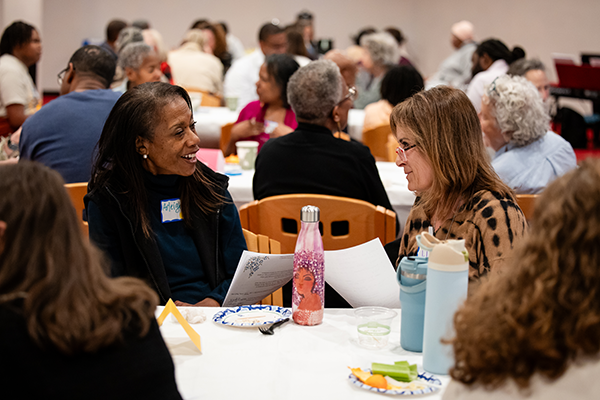
Storying Past Small Talk: Small Stories, Unexpected Connections
Storying Past Small Talk helps us turn moments from our lives into vivid, true stories — and use those stories to move past awkward chit-chat to the kind of connection we want: vital and real.
Through inviting prompts, brief writing experiments and an environment of generous listening, we discover we do not need an “extraordinary” story to feel interesting and interested with one another. As stories grow more sensorially detailed, we feel more deeply into what they’ve lived. And we begin to encounter strangers beyond roles or assumptions —but as fellow people with particular lives, memories, and meanings.
As journalist Monica Guzmán puts it: The more under-represented a person is in one's actual life, the more over-represented they tend to be in one's imagination. And often we don’t imagine complex people. We imagine simplified masks.
Storying Past Small Talk is a way to go beyond those masks and honor people’s actual, complex features — their own, and others’._______
“An unimaginable affirmation of all it can mean to strengthen, deepen, and encourage community connection through the prism of the Arts. To foster connection by helping members see beyond themselves, Recognizing that their needs, hopes, hurts, dreams are shared. And, therefore, to open people up to one another, enabling them to see in someone else's story a thread of their own.”
— Jeffrey Sirkman, Senior Rabbi, Larchmont Temple, Larchmont, NY
“{the process} brought creativity, vulnerability, and connection to the Adams Theater — and welcomed enthusiastic first-time visitors through our doors. Guy and Regie led with remarkable professionalism, care, and an intuitive gift for engagement that drew everyone in.”
— Yina Moore, Founder & Artistic Director, The Adams Theatre
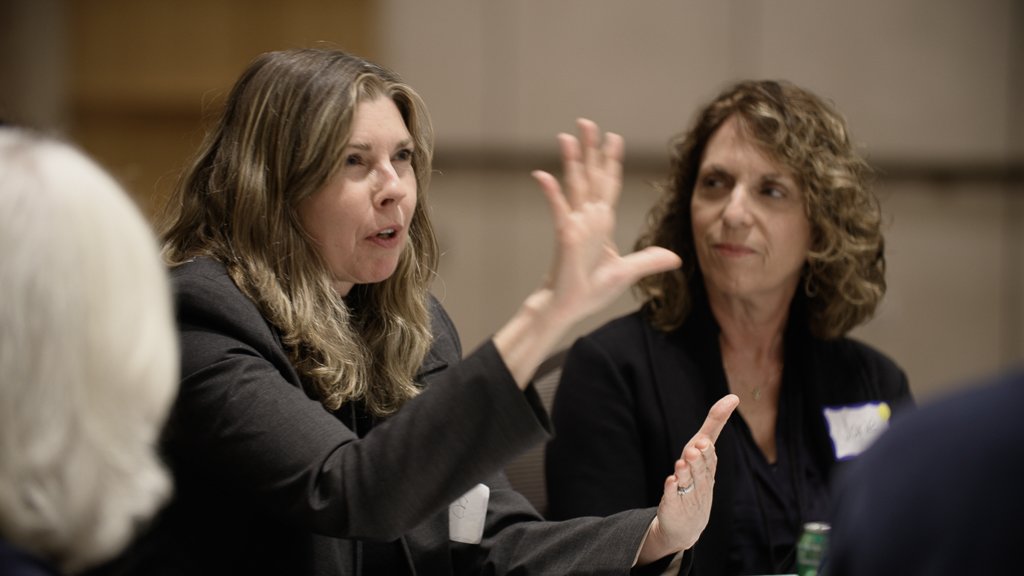
Listening Labs: Tools & Artistry for Connection
Even after the 2024 elections, and amidst intensifying fragmentation, some 70% of Americans — across party lines — feel they have a sense of responsibility to connect with people whose ethnic, political, religious and economic backgrounds and viewpoints are different from their own(1). The most common reason people give for seeking such “bridging” is to improve their communities. Among the most reliable reasons people do not do this is anxiety about engaging with others across these lines of difference. One promising strategy to reduce this anxiety is high-quality listening.
Americans tend to know this. Some 80% - across party lines - think they are good listeners. Yet 66% also feel that others do not listen well. On average, approximately 50% of Americans — and 68% of Gen Z — express interest in further cultivating high-quality listening skills (2).
The Listening Lab draws on the science of connection but is more than academic: The Lab is a place of action, where participants test tools by doing, and gather data through experience.
Through a series of small, often playful, and safe experiments, participants explore ways to listen, models of conversation, techniques to cool the heat that often leads to interruption, initiate conversations that bypass surface chitchat, tell moving stories, offer feedback that encourages more connection, and maintain psychological safety and a realness that leaves people feeling alive to each other and themselves.
Arts SoCo’s moving stories — told through powerful spoken word, music, and theatrically projected sand animation — facilitate generous listening with fellow participants in conversations that are honest, intimate, and alive.
(1). More In Common March 2025 national study of over 6,000 US adults across political, religious, economic and ethnic spectra.
(2). More in Common June 2025 national study of over 2,000 US adults across spectra
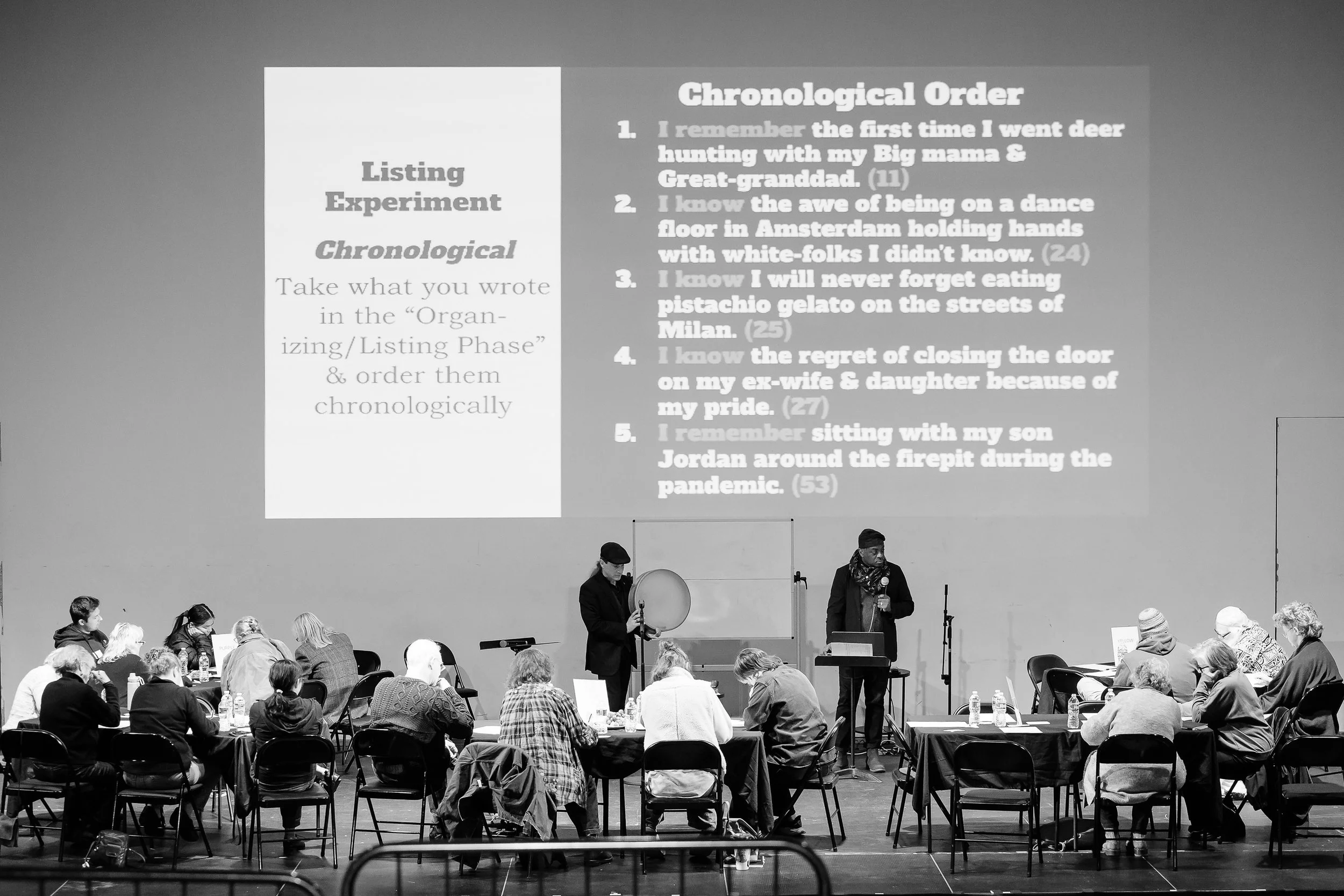
From Ponder to Page
From Ponder to Page is a fun, easy, safe three-phase process for crafting resonant stories out of seemingly small, meaningful experiences — even those that may seem quite ordinary.
Ponder to Page is designed especially for "non-writers:” Brief writing “experiments” (90 seconds!) and deft pedagogy transform story crafting from “scary” to “exciting” and easily doable — for anyone.
Many participants enter feeling they cannot write — or even that they have no story to tell. They leave having created a draft of a story with powerful emotional resonance (approximately 300 words). Previous participants have gone on to expand, refine, and even publish their stories in local and regional outlets (e.g., Berkshire Eagle).
The process builds social connection. Participants ease into depth with their own experience, those of fellow participants, and the resulting bonding with people who, at first, are often strangers. Looking back, participants cannot pinpoint a “big-deal plunge.” The relational deepening occurs degree by degree, nearly imperceptibly.
___________
• Duration (excluding setup): 2 hrs - 4 hrs
• Group Size: Up to 150, please contact Arts SoCo to discuss your needs
• Team: 2 ASC facilitators + 1-3 support staff depending on group siz
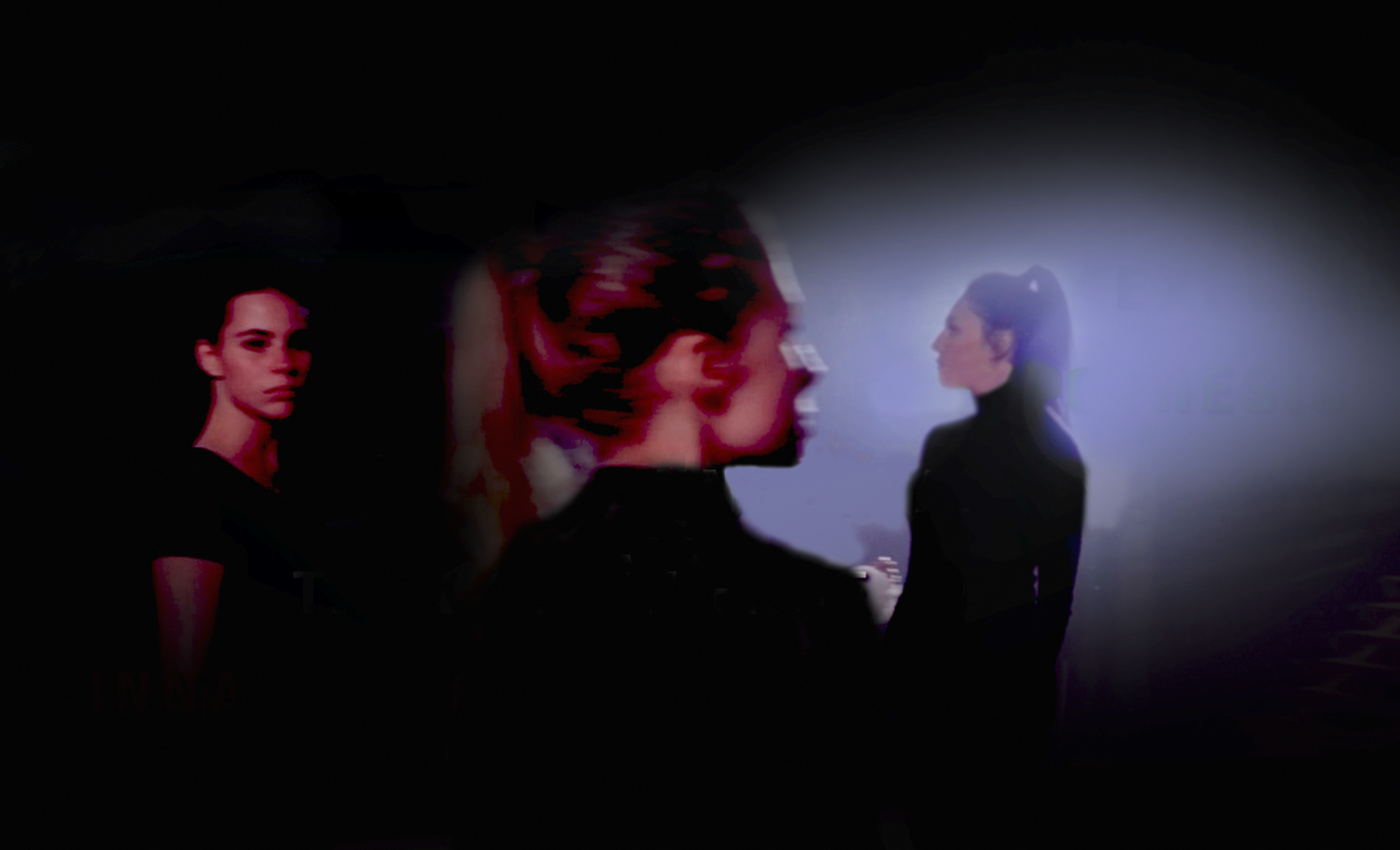
Listening Through The Music
Group Tuning Through Improvisation in Movement & Music
Exciting, quickly learned movement and music improv games give powerful tools to working with others: the abilities to tune in, connect, and respond spontaneously and meaningfully to one another. These games reset ordinary power dynamics, setting up cooperative models where every voice matters.
Initially created for mediation organizations like Seeds of Peace, this experiential workshop has been adapted for professional teams seeking more ways to create and work together.
No previous musical or movement experience required. Participants should come ready to move, play and get curious.
___________
Duration (excluding setup): 1.5-2 hrs
Group Size: Flexible, please contact Arts SoCo to discuss your needs
Team: 1 Arts SoCo facilitator + 1 support staff depending on group size